Turning a year of deferred UX improvements into a prioritised backlog
Using a design optimisation approach to unblock stalled work at UKEF.
Challenge
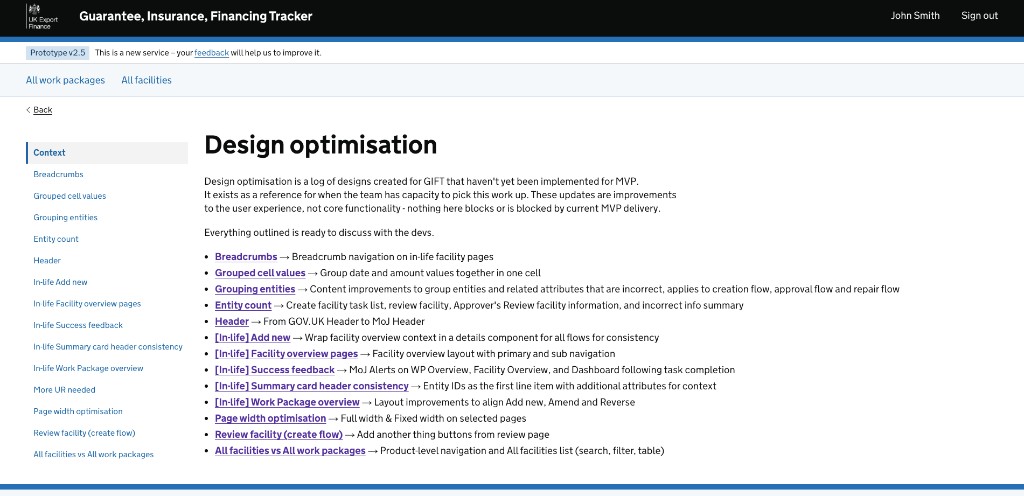
I joined the UKEF project in January 2026 and learned from another interaction designer that over a dozen UX improvements had been pushed back and sitting outside MVP for more than a year with no clear path back into delivery. Whenever something came up, the answer was usually “we'll pick this up after design optimisation” or “that sounds like a nice to have.”
My role
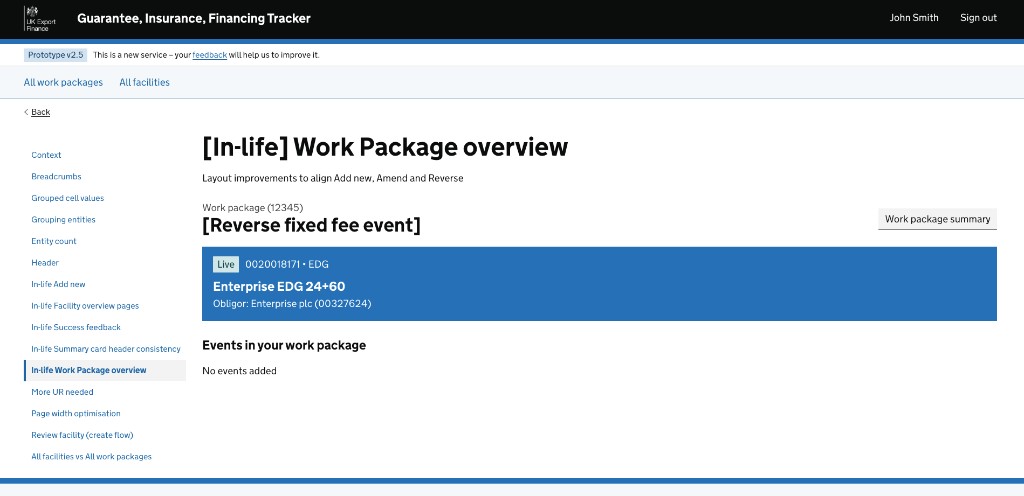
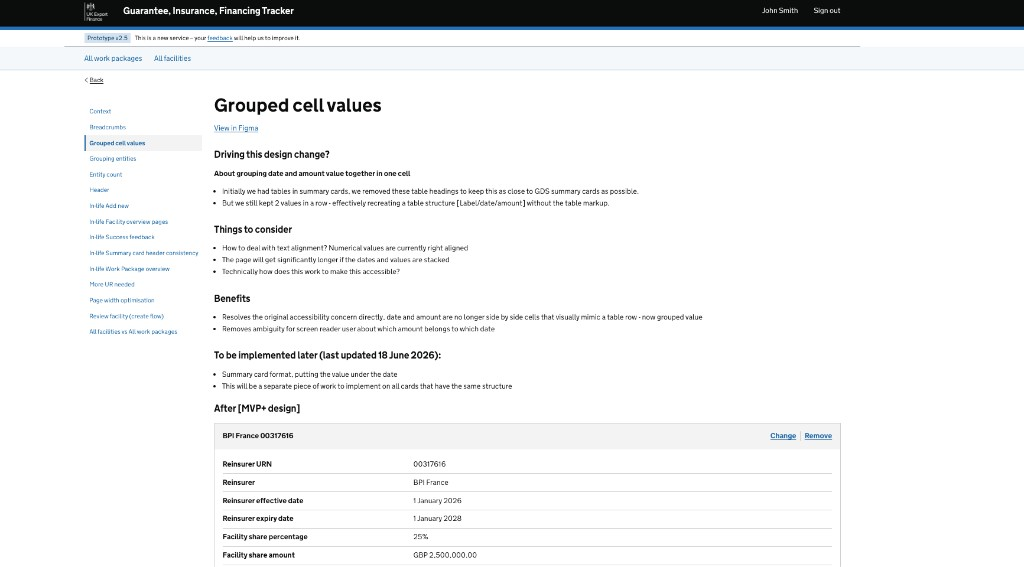
As MVP work came to an end, I used my available design capacity to revisit over a dozen UX improvements that had been deferred. Rather than leaving them scattered across conversations and notes, I created a dedicated Design Optimisation area within the prototype. This gave developers, BAs, researchers, SMEs and the product manager a single place to review complete design proposals and discuss implementation. The real aim was to get buy-in from our product manager. Rather than repeatedly discussing ideas in meetings, this shifted conversations from:
“Should we do this?”
to
“How difficult would this be to build?”
Why this worked
Instead of discussing abstract ideas in meetings, stakeholders could see complete solutions, understand user benefits and begin estimating implementation effort.
Impact
Several improvements were reprioritised, including breadcrumbs, entity grouping and page layout improvements, while others entered technical discussions for future delivery. More importantly, previously deferred UX work became visible again, allowing the team to assess its value instead of leaving it indefinitely outside the roadmap.
What I learned
This project reinforced that internal services deserve the same attention to usability as public-facing services. It also showed me that user experience isn't only about designing interfaces - sometimes the biggest challenge is making good ideas visible enough that stakeholders are ready to prioritise them.